2016/02/05 TrendView VIDEO: Equities & Fixed (weekend)
© 2016 ROHR International, Inc. All International rights reserved.
The analysis videos are reserved for Gold and Platinum Subscribers
TrendView VIDEO ANALYSIS & OUTLOOK: Friday, February 5, 2016 (weekend)
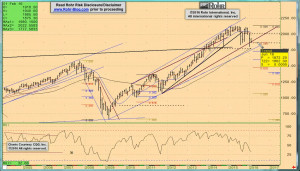 Global View: Equities & Fixed
After another rather active week in the equities with further critical trend potentials looming into next week, it seemed important to develop further analysis after the dust settled on Friday. While might not have been as easy of late to remain overtly bearish as it was at the top of the year, the rather extensive slide has left the US equities into similar critical lower support once again. Of note in light of the very different overall trend tendencies in the different equities, they are all once again at somewhat similar (in some cases extremely similar) major trend decisions. That is due to the highly divergent overall trend evolution in each of the equities has still left them down into similar major trend support as the US market revisiting the major weekly up channel support that was only temporarily violated on the March S&P 500 future whipsaw below 1,865-60 (and its 1,850 Tolerance.) The return to that area in the wake of Friday’s US Employment report is the reason we developed this weekend’s TrendView video analyses as two separate Global View posts.
Additional time was necessary to properly review the ultra-long term trend dynamics and the near-term contingencies that now become very important. That meant that the equities had to be assessed along with the fixed income separate from the foreign exchange. And there is indeed a global view second TrendView video analysis post below covering the foreign exchange markets. Suffice to say for now that our concentration on US equities having dropped back down to major support (March S&P 500 future 1,865-60) in three weeks is matched by the FTSE and the NIKKEI. This is also passingly similar in weaker sister DAX getting down to even more depressed lower supports by sliding slightly below its August-September lows. Even if not exactly bullish of late, the US has been the ‘most resilient’ sister. As such, its fate likely dictates quite a bit of what will transpire in the other equities in light of their weaker tone, and will also affect the path of the govvies.
_____________________________________________________________
Video Timeline: It begins with macro (i.e. fundamental influences) mention of the return to weaker data overall that was very apparent in the Bank of England holding the base rate steady at the 0.50% all-time low on Thursday. The Fed’s Dudley also raised issues about whether the Fed’s recent hike and continued hawkish position is the right path. And then there was the US Employment report that reinforced the Fed’s hawkishness (more below.)
It moves on to S&P 500 FUTURE short-term view at 03:00 and intermediate term at 07:30 with a view of the very long term trend on the monthly chart at 10:15, and OTHER EQUITIES from 12:30 and GOVVIES from 19:30 including the BUND at 23:45, and SHORT MONEY FORWARDS from 27:30 prior to returning S&P 500 FUTURE short-term at 30:30.
_____________________________________________________________
Authorized Gold and Platinum Subscribers click ‘Read more…’ (below) to access the balance of the opening discussion and TrendView Video Analysis and General Update. Silver and Sterling Subscribers click ‘Read more…’ (below) to access the balance of the opening discussion.
NOTE: Back on the evening of December 8th we posted our major Extended Perspective Commentary. That reviews a broad array of factors to consider Will 2016 be 2007 Redux? For many who believe that the US economy is really strengthening and can once again lead the rest of the world to more extensive recoveries, this may seem a bit odd.
Yet there are combined factors from many areas we have been focused on since the early part of last year which are less than constructive for the global economy and equity markets. We suggest a read if you have not done so already.
We pointed out in December that in the face of another likely Santa Claus Rally this was not an actionable view during the year-end equities rally. Yet it was (and remains) important background to utilize into 2016. This is much like our major late 2006 perspective on Smooth Rebalancing? …or… The Crash of ‘07? (even though the actual crash was deferred into 2008.)
▪ That is due to the US picture deteriorating in quite a few ways that became even more confused after Friday’s US Employment report’s mixed indications. The lower than expected Non-Farm Payrolls gain was offset by the quite a bit stronger than expected Hourly Earnings (up 0.50%) and the Unemployment Rate dropping down to 4.90%.
The headline number might have further encouraged the recent shift to a ‘bad news is good news’ equities psychology on the ECB, Bank of Japan and even Bank of England actions and indications. However, the wage indications finally picking up after a year and a half of stagnancy along with that drop below 5.00% on the unemployment number is just the sort of thing to encourage the Fed to continue its ‘normalcy bias’.
Prior to Friday's report there was much in the US economic data from Retail Sales to Durable Goods Orders to Factory Orders indicating a still weak consumer and especially weak manufacturing sector. That seemed to both substantially diminish the potential for another FOMC rate hike in March, and even bring into question whether the multiple hikes the FOMC had indicated were likely the year were still viable.
Yet with Friday's report restoring the Fed's hawkish possibilities right into a weakening hiring picture, it was really a ‘this news is just good enough to be bad’ psychology for the equities. And the equities will also be burdened by the prospect of Janet Yellen’s two days of Congressional testimony on Wednesday and Thursday of this week.
▪ On Friday afternoon we posted our Commentary: FOMC – MPC Battle? that highlights the degree to which the Fed might be misguided in its more hawkish instincts compared to the other central banks at present. To paraphrase the late Ronald Reagan, “There they go again!” The FOMC Statement a week ago Wednesday cited all manner of good reasons why this may not be the time to withdraw accommodation.
Yet it also included language confirming their belief that inflation will “…rise to 2 percent over the medium term as the transitory effects of declines in energy and import prices dissipate and the labor market strengthens further.’ You can see the highlights of the FOMC statement in our marked up version in that post.
That is code language (although not at all well-disguised) which speaks of a Fed still suffering from ‘normalcy bias.’ That leaves it hoping everything it has done so far is enough to get back to higher rates. Hence in its typical perverse manner during a ‘bad news is good news’ phase, the market (i.e. equities) not liking anything which tends to reinforce the argument of the hawks on the Fed.
Yet as we noted in our December 16th Commentary: Fed’s ‘Normalcy Bias’ Continues right after the first rate hike in almost a decade, the Fed had probably missed the right timing to raise rates back in late 2014. We also had explored this topic at some length in our Will 2016 be 2007 Redux? post back on Tuesday, December 8th. That explored the many reasons why headwinds will be strong enough to present significant challenges to the global economy and equities in 2016. And at least so far the equity markets seem to at least agree whenever there is a reason to feel the Fed might be tightening; and perversely rally whenever the data weakens enough to forestall any aggressive tightening.
And the FOMC statement to weaken a half ago seems to reinforce the same sort of psychology that prevailed after the mid-September FOMC meeting. Even though there was no rate hike at that meeting due to the overall weak background, the Fed threatening to raise rates anyway due to what it considered a strengthening forward view was very toxic for the equities.
Friday's Commentary: FOMC – MPC Battle? also reviews quite a few other factors that we have covered previous on why the Fed's significant focus on the US employment situation and spite of so much negative data on other fronts could be misguided. Not the least of those is the hollowing out of the US middle class. While the Fed might find the occasional increase in hourly earnings encouraging, it is important to keep in mind that is from a lower base during the current lackluster recovery than during previous recovery phases. We suggest a read of Friday's Commentary for those who have not already reviewed it.
▪ And one of our favorite (even if not very short-term trend influential) indications is back on Monday morning: The next set of Organization for Economic Cooperation and Development (OECD) Composite Leading Indicators (CLI.) As we have noted previous, the titles of monthly updates attempt to be upbeat no matter what the actual data may show.
Yet even a cursory review of the actual graphs of the future economic indications in January’s OECD CLI release shows real weakness. The US is clearly in a cyclical downturn since as far back as late 2014, and weakening further at present. The same is true for the UK along with Japan. Of course China is still weak, and commodity economies like Canada and Russia are commensurately still suffering, even if India and Brazil might be bottoming. The Euro-zone recovering is not of much comfort for two reasons.
The Euro-zone is starting from a very low base on both economic growth and inflation, and the recent data has not been very inspiring. And in any event, we have the same question as previous on that: With so many other major economies weakening, are we really going to rely upon Europe to lead the way higher?
And of course, that was merely the latest set of atypically downbeat indications from the OECD. As the monthly CLI titles imply, OECD would rather always take a ‘glass is half full’ view of the global economy; at least in between the recent far more negative semiannual Economic Outlook analysis and presentations. The headline for that January release (November’s indications with the typical two month delay) was “Composite leading indicators continue to point to stable growth momentum in the OECD area.”
As noted above, the reality was much weaker than that. Any literal headline change to a less upbeat view from its typical ‘glass is half full’ view of the global economy would speak volumes about the OECD actually being worried that more extensive weakness could be setting in. We will need to see what we get on Monday morning.
▪ All the rest of the fundamental background is the same as in Friday's Commentary: FOMC – MPC Battle? post and previous analyses. We refer you back to those for the extended macro-fundamental perspective and overall market psychology.
The TrendView VIDEO ANALYSIS & OUTLOOK is accessible below.
The post 2016/02/05 TrendView VIDEO: Equities & Fixed (weekend) appeared first on ROHR INTERNATIONAL'S BLOG ...EVOLVED CAPITAL MARKETS INSIGHTS.